Composite Covers in Telecom Infrastructure
Fibre and telecom chambers are opened often, sit in mixed traffic zones and carry live cable. What that means for access cover specification.
Telecom access chambers behave differently from water and wastewater chambers. They are opened far more frequently, they are concentrated in footways and kerbside zones where traffic conditions change along a single street, and the asset below is cable rather than flow. Those three facts shape the cover specification more than anything else.
Frequent access changes the priorities
A fibre chamber may be opened many times during a build and then repeatedly for splicing, testing and new customer connections. Every opening is a manual handling event, usually by a small crew working in a footway beside moving traffic.
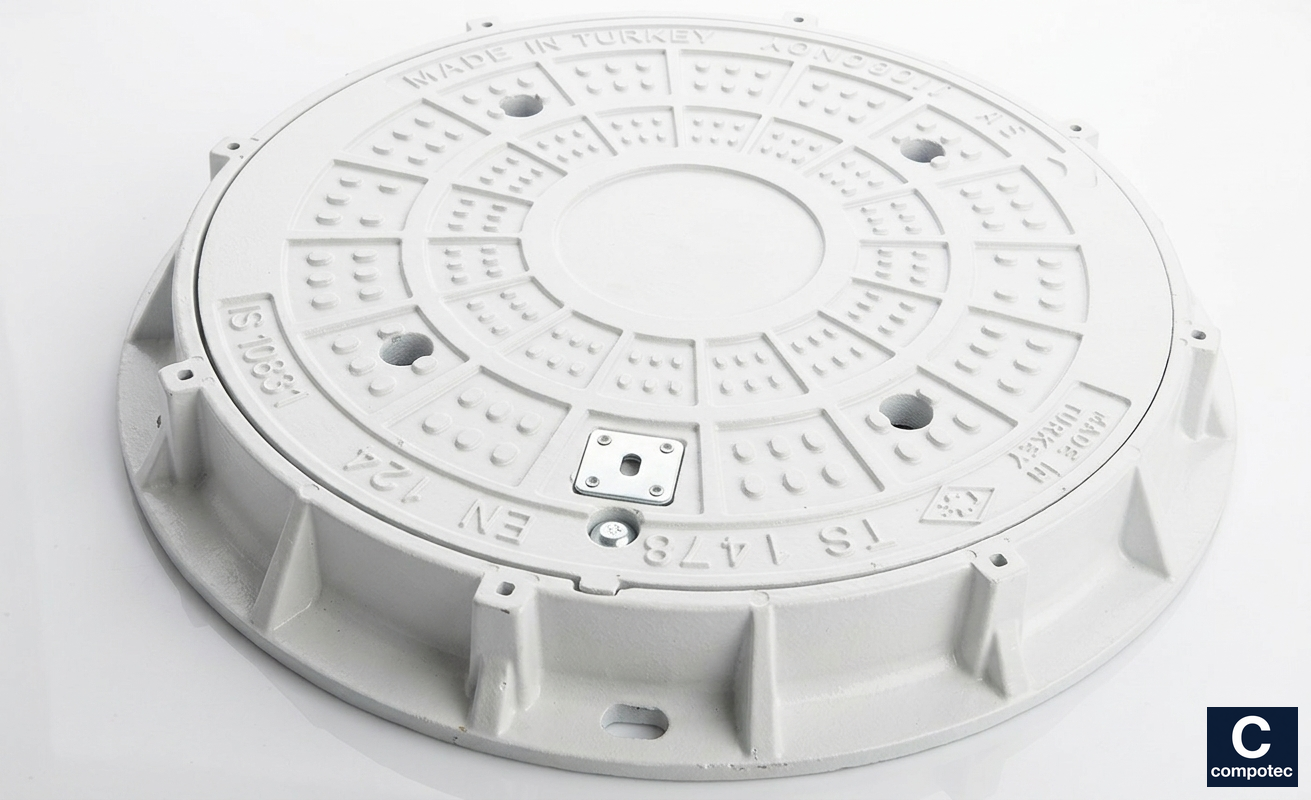
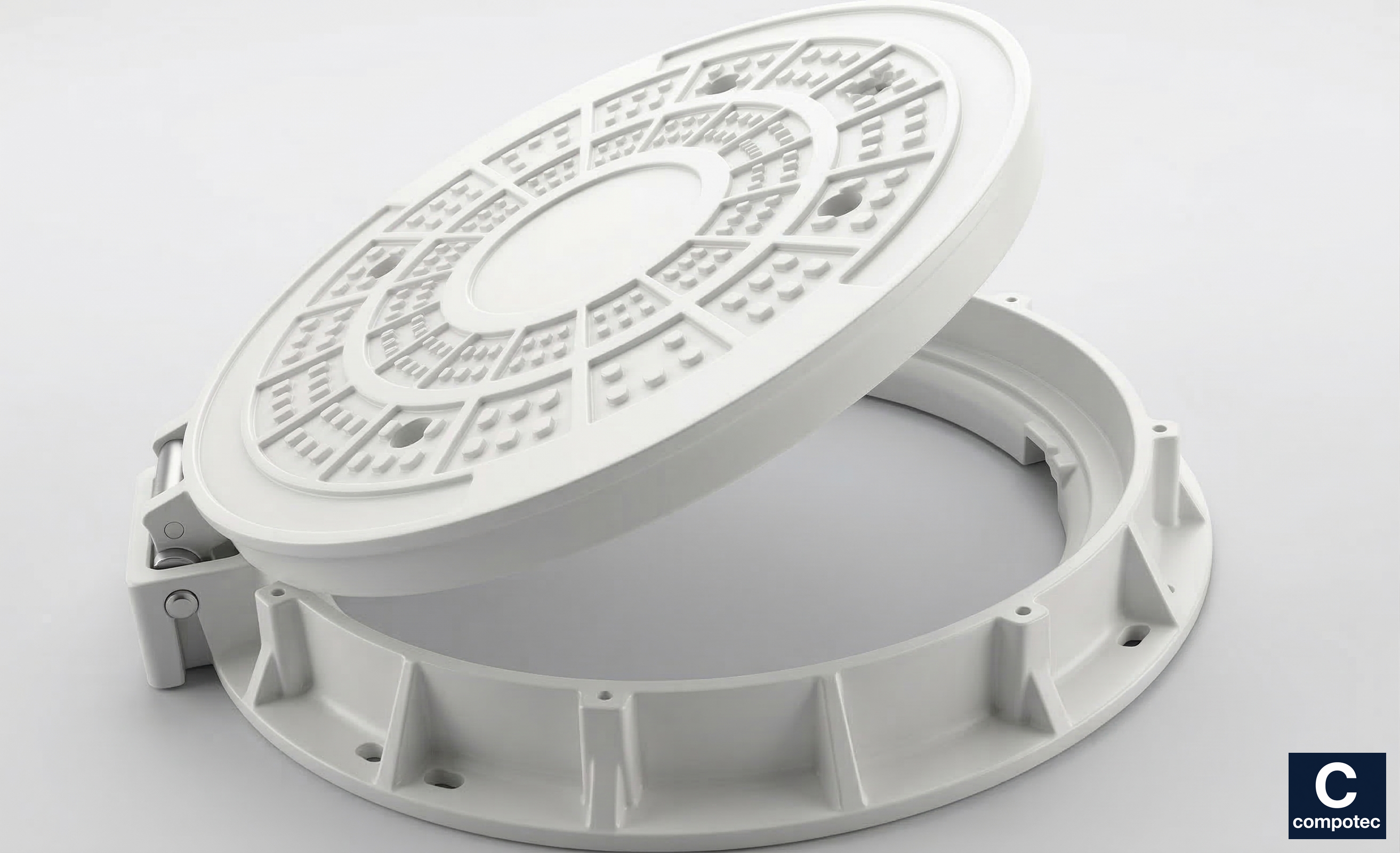
Unit weight therefore stops being a logistics detail and becomes an operational constraint. Compotec states its composite covers as three times lighter than the metal versions, and the family includes the 23 kg Ø 600 mm MH-301 and the 18 kg 500 x 500 mm MH-400.
Electrical and corrosion considerations
Telecom chambers hold cable, joints and connection hardware. A cover that corrodes sheds material into the chamber and loosens on its seating; composite does not corrode, so the frame seating and the chamber stay as installed.
Composite also has no scrap value. Telecom chambers are frequently located in public footways where an unattended cover is exposed, and removing the scrap incentive removes the open-chamber risk that follows a theft.
Mixed traffic along one street
A single telecom route can run along a footway, cross a vehicle entrance, pass a kerbside parking bay and then cross a carriageway. The class has to follow the route point by point: B125 in the footway, C250 at kerbside and gutter zones, D400 wherever the chamber sits in the trafficked width.
Compotec manhole covers are available in B125, C250 and D400, so a single product family can cover an entire route without changing supplier or cover geometry.
Chamber geometry
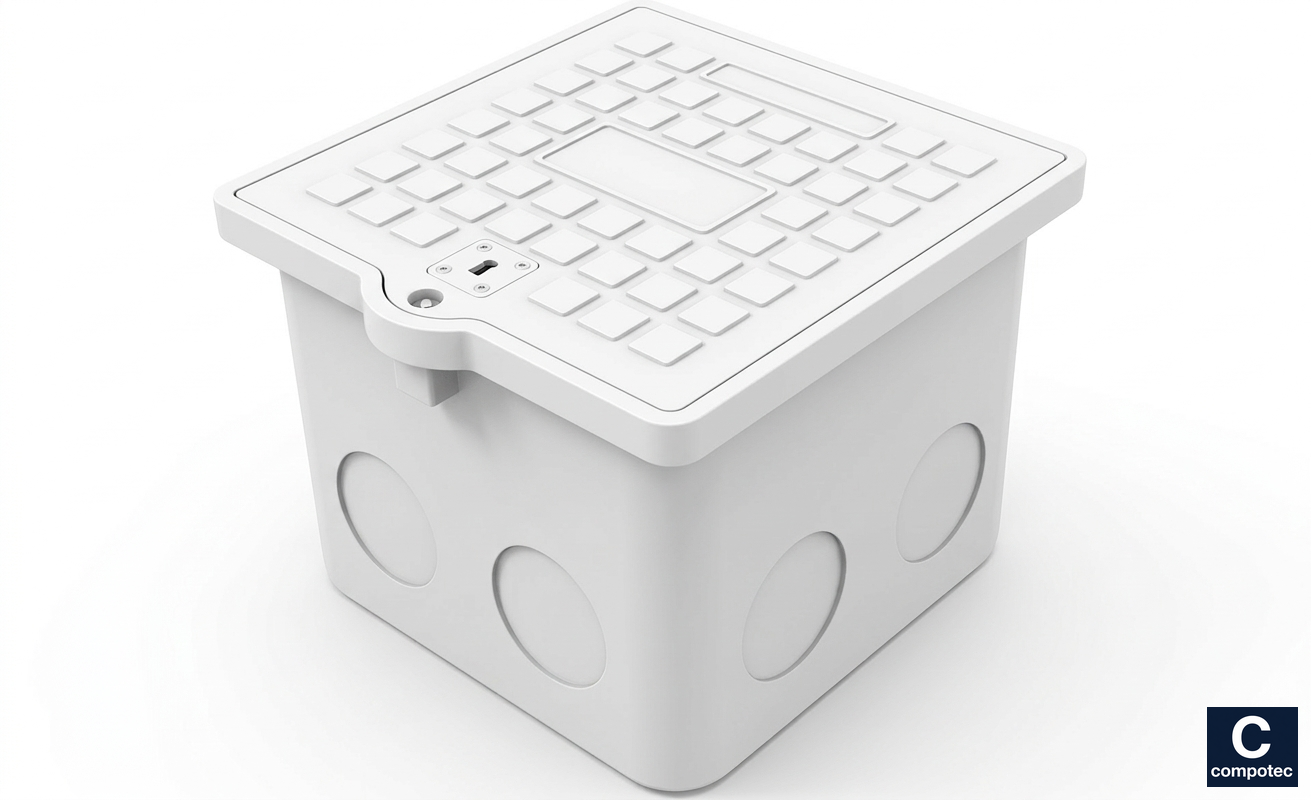
Telecom chambers are often rectangular, because cable has a bend radius and equipment passes through a straight edge more easily than a round aperture. Compotec supplies 400 x 400 mm and 500 x 500 mm square covers alongside Ø 550 mm and Ø 600 mm round models, and the joint box family covers underground utility connection chambers.
Identification on the network
Operators generally need chambers identifiable in the street. Compotec lists a wide colour range and customer logo application as available options, which allows a network owner to mark chambers consistently without adding a separate plate or paint cycle.
Compotec in telecom works
Compotec composite covers are supplied to telecommunications chamber works, including projects in Istanbul. Photographed delivery and installation records are published in the news and projects section of this site.
For telecom routes, specify by point rather than by street, keep unit weight within what the attending crew can safely handle, and use a family that covers B125 through D400 with both round and square openings.