How to Select the Correct Manhole Cover Size
Clear opening, frame footprint and chamber geometry decide the cover size. A practical sequence for getting it right before the chamber is built.
Size errors are more expensive than class errors, because a cover in the wrong class can be swapped while a cover with the wrong opening usually means rebuilding the chamber head. This guide sets out the order in which the dimensions should be fixed, and lists the openings Compotec offers for composite manhole covers.
Start from the clear opening, not the outer dimension
The clear opening is the working aperture a maintenance team has to pass through with tools, equipment and, where relevant, personal fall protection. It is determined by the work that happens in the chamber, not by the size of the chamber itself.
Fix that first. Everything else — frame footprint, bedding detail, surface build-up — is then dimensioned around it.
Check the frame footprint against the chamber
The frame needs a continuous, level bearing on the chamber head. Measure the available bearing width on all sides, and confirm that the surrounding surface construction can be finished flush with the cover.
In reconstruction work, measure the existing chamber rather than assuming the drawing is current. Chamber heads are frequently rebuilt over decades and rarely match the original detail.
Round or square
Round openings suit shafts and inspection chambers, and a round cover cannot fall into its own opening. Square openings suit valve chambers, water meter chambers and rectangular utility pits where equipment has to pass through a straight edge.
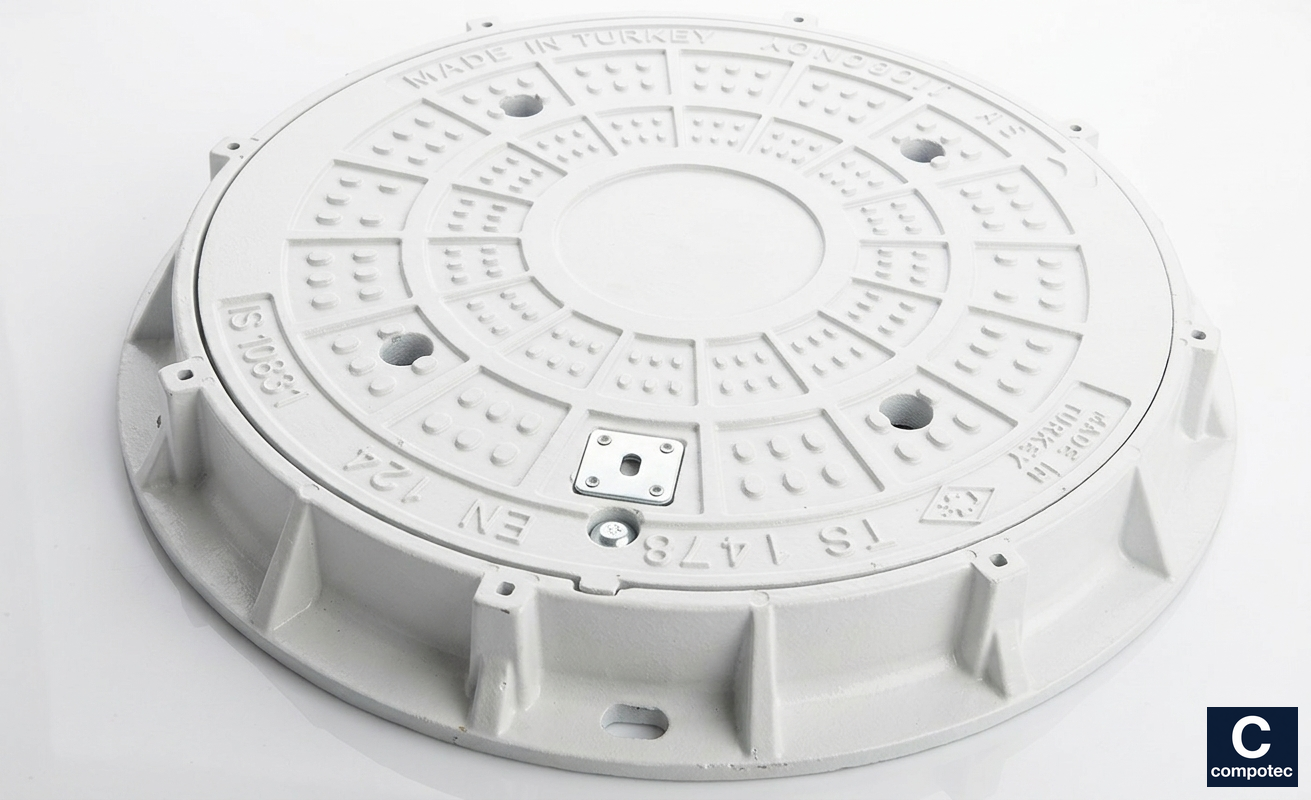
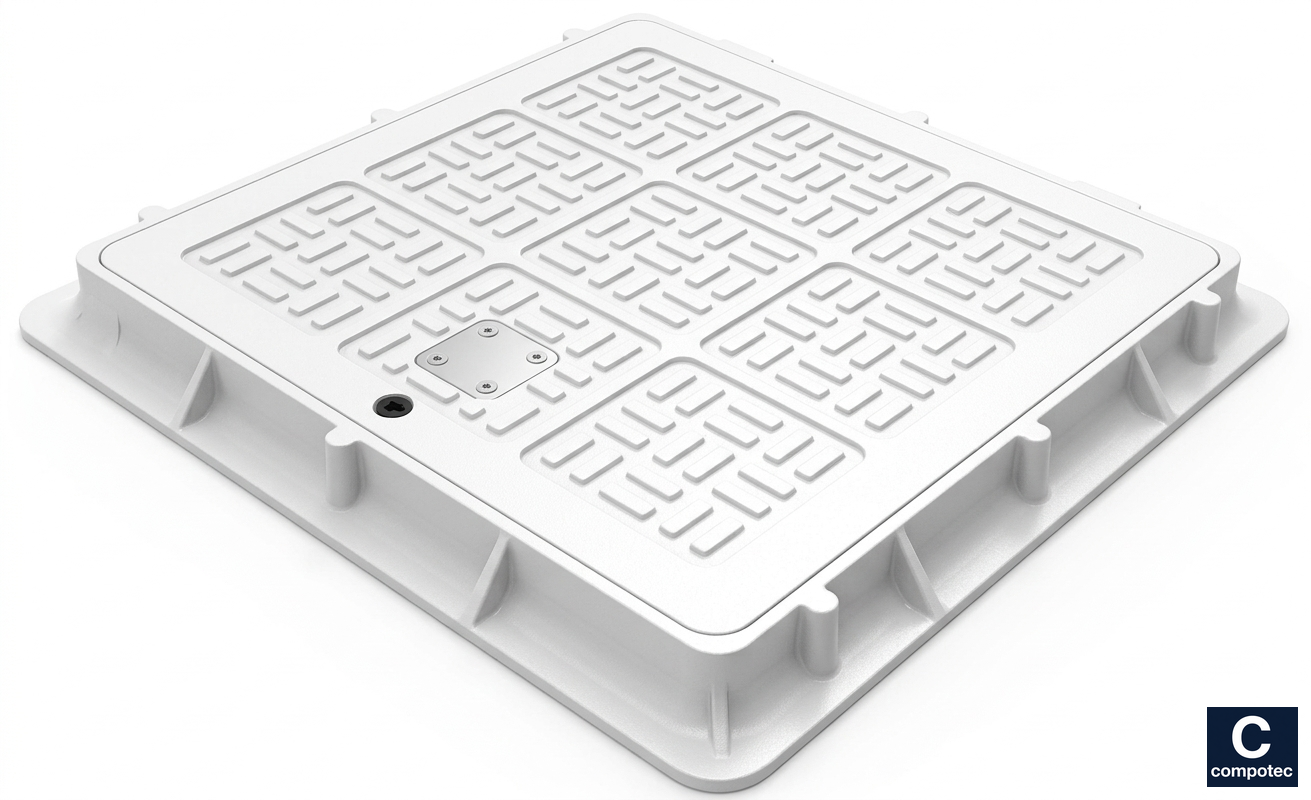
Compotec offers round composite manhole covers at Ø 550 mm and Ø 600 mm, and square covers at 400 x 400 mm and 500 x 500 mm.
Weight and handling
Unit weight determines whether the cover can be opened safely by the crew that will actually attend the chamber. Within the Compotec manhole cover family, published weights range from 18 kg for the 500 x 500 mm MH-400 and 23 kg for the lightweight Ø 600 mm MH-301, up to 44 kg for the Ø 600 mm MH-100.
Where a chamber is attended frequently, the lighter option in the same class and opening is usually the better operational choice.
Hinge, locking and gasket
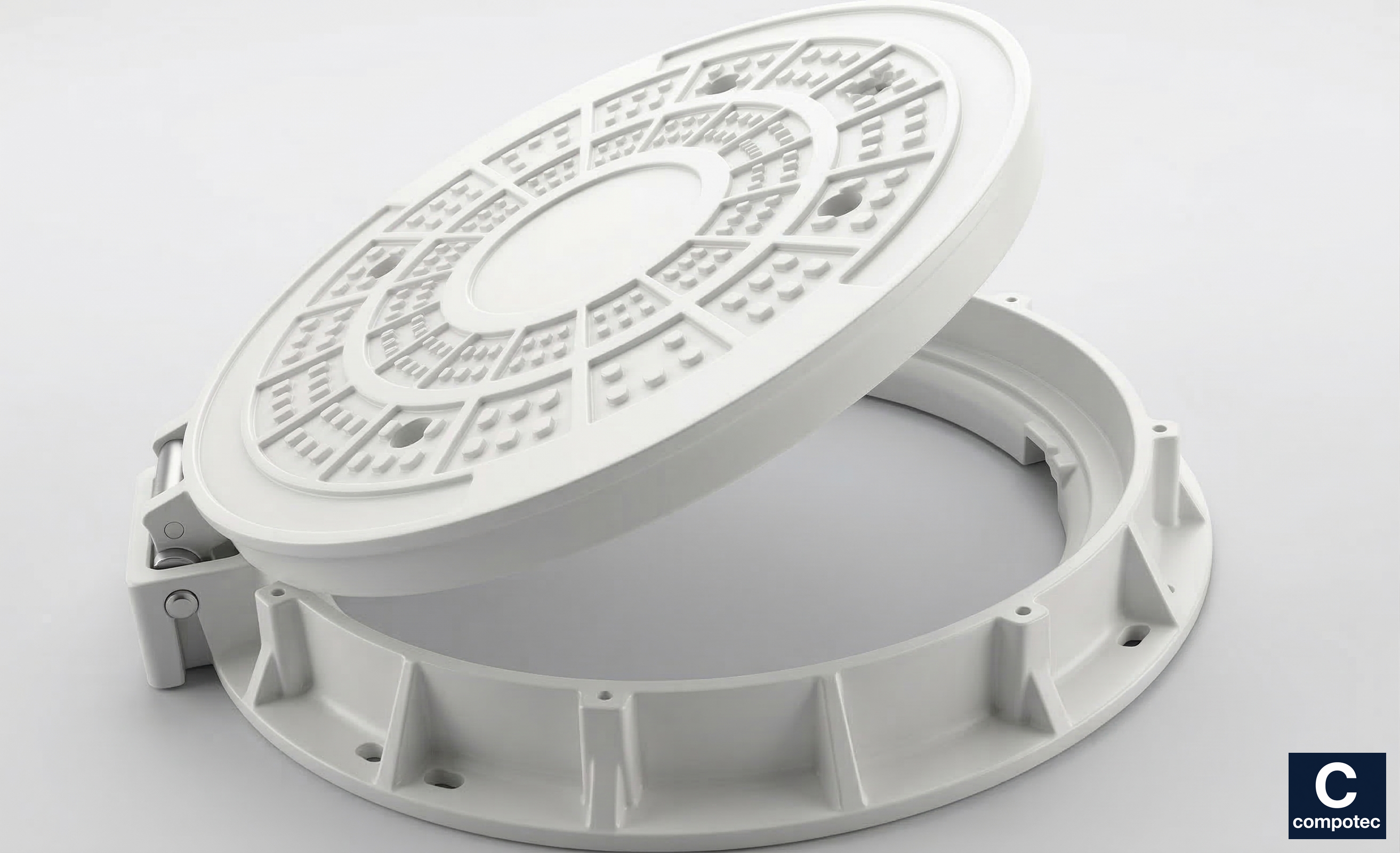
A hinged model keeps the cover attached during maintenance, which is valuable beside live traffic. MH-100 and MH-200 use a jointed hinge system; MH-100 opens to 180° and MH-400 to 200°.
Hingeless models such as MH-300 and MH-301 are fully removable where an unobstructed opening is preferred. Manual locking, rubber gasket seating and 4–6 ventilation holes are listed options across the family.
Record the selection
Write down, per chamber: clear opening, frame footprint, load class, model code, hinge type, locking and colour or logo requirement. That record is what makes a replacement years later a single order rather than a survey.
Fix the clear opening first, verify the frame footprint on site, then choose the model and class. Each Compotec product page states the shape, opening, weight, material and available classes needed to complete that record.