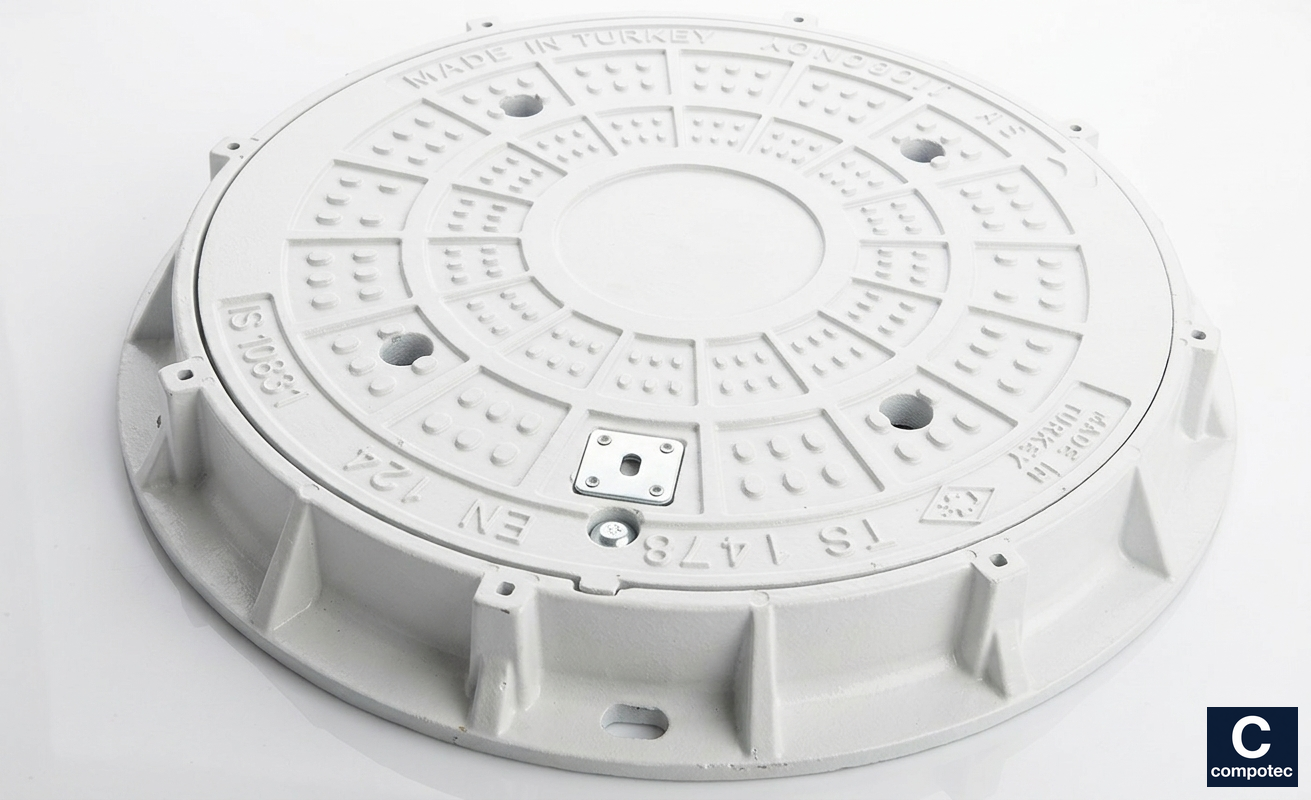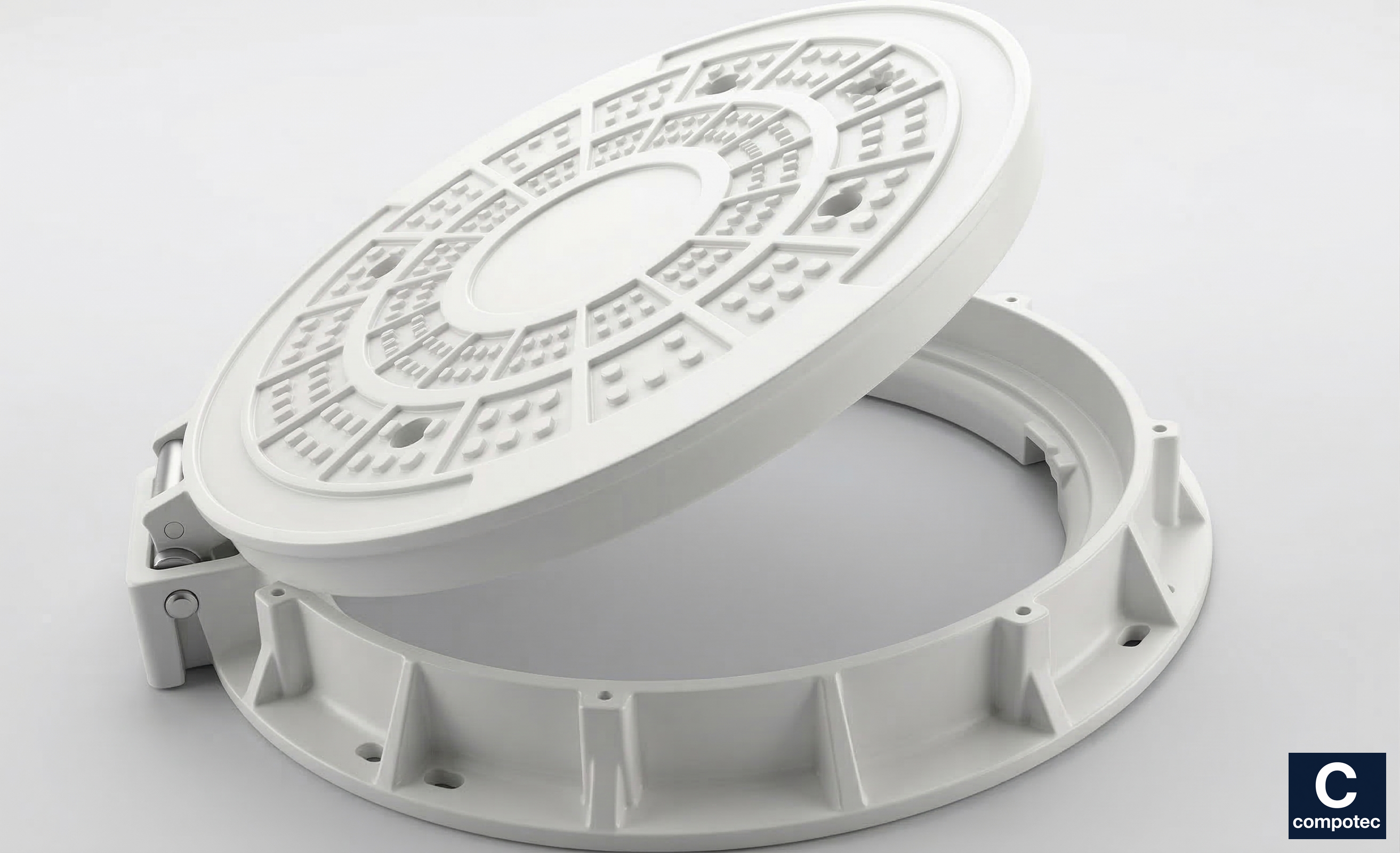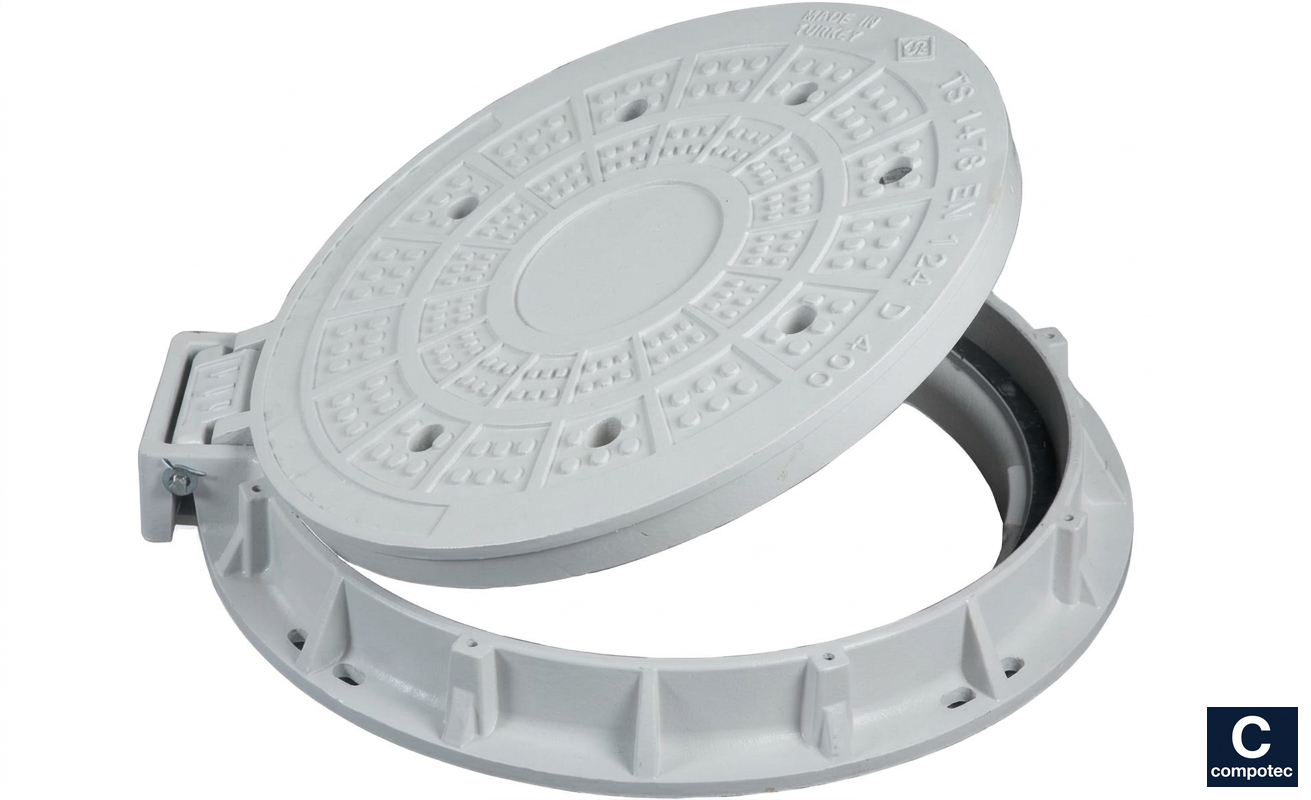
A15, B125, C250 and D400 Manhole Cover Load Classes
What the EN 124 load classes mean, where each one belongs in a street cross-section, and which classes Compotec supplies for composite manhole covers.
Load class is the single specification that decides whether an access cover survives its location. It is not a quality grade and not a marketing label: it states the load the class is defined for, and therefore the traffic the installation point may carry. This guide explains the classes in plain engineering terms and shows which of them apply to Compotec composite manhole covers.
What a load class actually describes
A load class in EN 124 is expressed as a letter and a number: the letter identifies the group of installation areas, the number states the test load in kilonewtons. A15 corresponds to 15 kN, B125 to 125 kN, C250 to 250 kN and D400 to 400 kN.
The class is a property of the complete cover and frame assembly, not of the material alone. A composite cover and a cast iron cover of the same class are intended for the same installation area; the difference between them lies in corrosion behaviour, weight, noise and scrap value, not in the class definition.
A15 — pedestrian and green areas
A15 covers areas that only pedestrians and cyclists use: park paths, green areas and footways fully closed to vehicles. The moment a maintenance vehicle, a delivery van or a parking car can reach the cover, A15 is no longer the right class.
B125 — footways and comparable parking areas
B125 applies to footways, pedestrian zones and car parking areas of comparable use. It is the most common class for chambers set back from the kerb line, including many telecom, electrical and water meter chambers in urban streets.
Compotec supplies B125 versions of MH-100, MH-200, MH-300 and MH-400.
C250 — kerbside and gutter zones
C250 covers the strip alongside the carriageway: kerb lines, gutter zones and the edge areas that vehicle wheels track over while manoeuvring. This is the class specified when a chamber sits within roughly half a metre of the kerb.
Compotec supplies C250 versions of MH-100, MH-200, MH-300, MH-301 and MH-400.
D400 — carriageways and hard shoulders
D400 is the class for carriageways, hard shoulders and parking areas used by all vehicle types, including heavy goods traffic. Any chamber located in a traffic lane should be specified at this class.
Compotec supplies D400 versions of MH-100, MH-200, MH-300, MH-301 and MH-400.
Higher classes and why they are not claimed here
The standard also defines classes above D400 for airports and heavy industrial areas. Compotec does not list those classes for its composite manhole covers, and they are therefore not offered or implied on this site. If a tender requires a class above D400, say so at enquiry stage so the correct solution can be discussed rather than assumed.
Common specification mistakes
Specifying to the street rather than to the point: a quiet residential street still needs D400 where the chamber sits in the wheel path of a refuse vehicle.
Ignoring construction traffic: a footway chamber installed before the site is finished may carry site vehicles for months.
Mixing classes within one scheme without recording which chamber has which cover, which makes later maintenance replacement unreliable.
Select the class from the traffic that actually crosses the cover, record the class per chamber, and confirm the model against its product page before ordering. Every Compotec manhole cover states its available classes on its own page.