How to Specify Composite Gully Gratings
Opening size, load class, hinge and locking behaviour: the criteria that decide whether a stormwater gully grating survives its position in the road.
A gully grating sits where water, grit and wheels all arrive at the same point. It is therefore the drainage component that is replaced most often — usually because the class was chosen for the street rather than for the gully position, or because the grating could not be opened and cleaned quickly. This guide sets out the criteria used to specify composite gully grating sets, using the sizes and classes Compotec actually supplies.
Start with the position, not the street
Gullies sit in the gutter line, which is exactly where vehicles track while parking, turning or pulling in. A grating set back in a pedestrian zone and a grating in the channel of an urban carriageway are different specifications even on the same street.
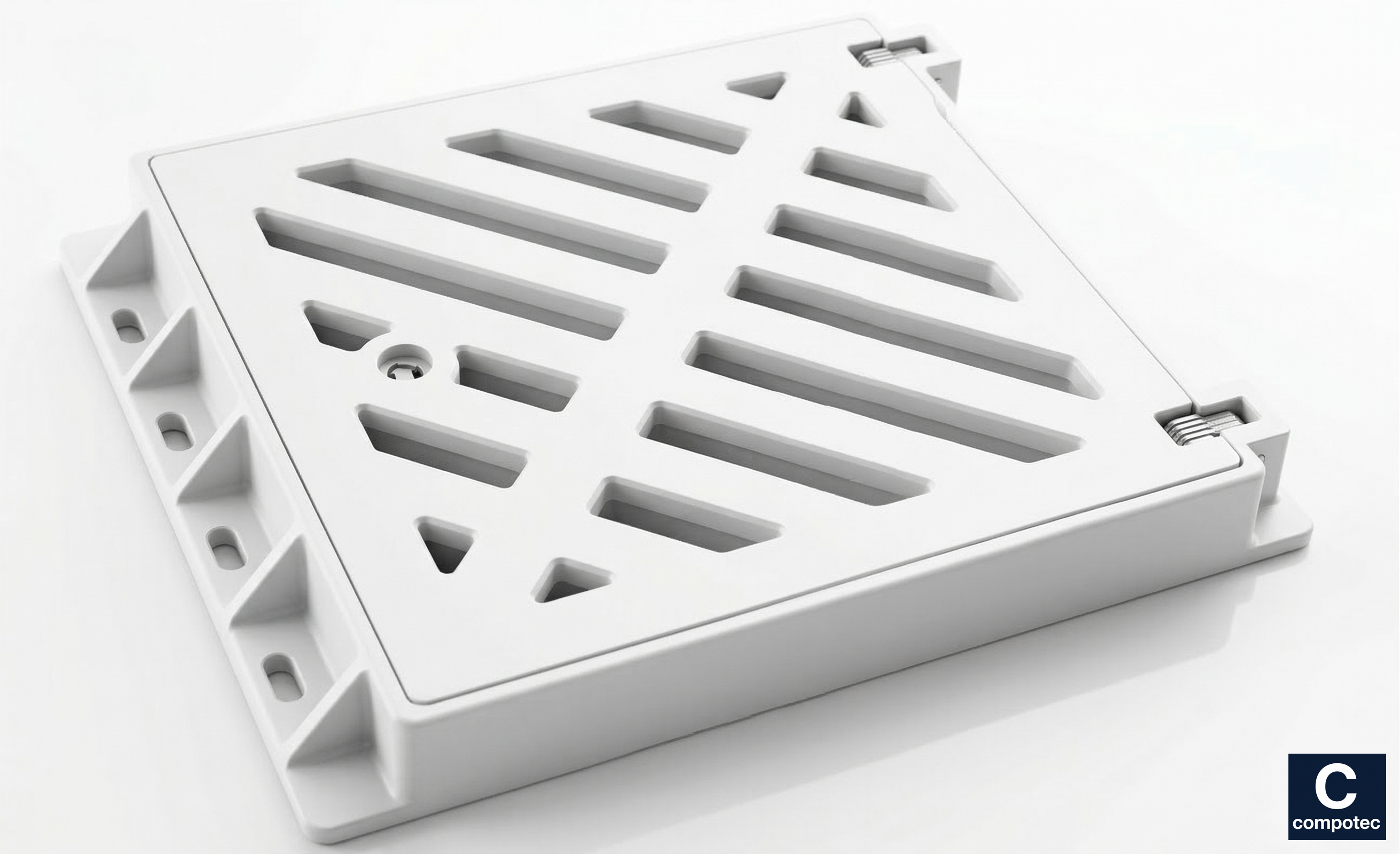
Compotec composite gully grating sets are available in B125, C250 and D400, so the class can follow the position rather than the catalogue. The GG-208 slot grating is the exception: it is listed for A50 and A15 and belongs in pedestrian and landscaped areas only.
Match the opening to the chamber, not to habit
The grating set has to suit the chamber that already exists on site. The Compotec range covers square, rectangular and slot formats: 570 × 570 mm (GG-100, GG-200), 485 × 485 mm (GG-102, GG-202), 600 × 600 mm (GG-204), 640 × 345 mm (GG-101, GG-201), 460 × 660 mm (GG-207), 400 × 600 mm (GG-203), 400 × 450 mm (GG-206), 300 × 500 mm (GG-205) and 200 × 500 mm (GG-208).
Measure the clear chamber opening and the bearing surface before selecting a size. A grating that bridges a damaged bearing surface will rock under traffic regardless of its class.
Hinge and lock decide the maintenance cost
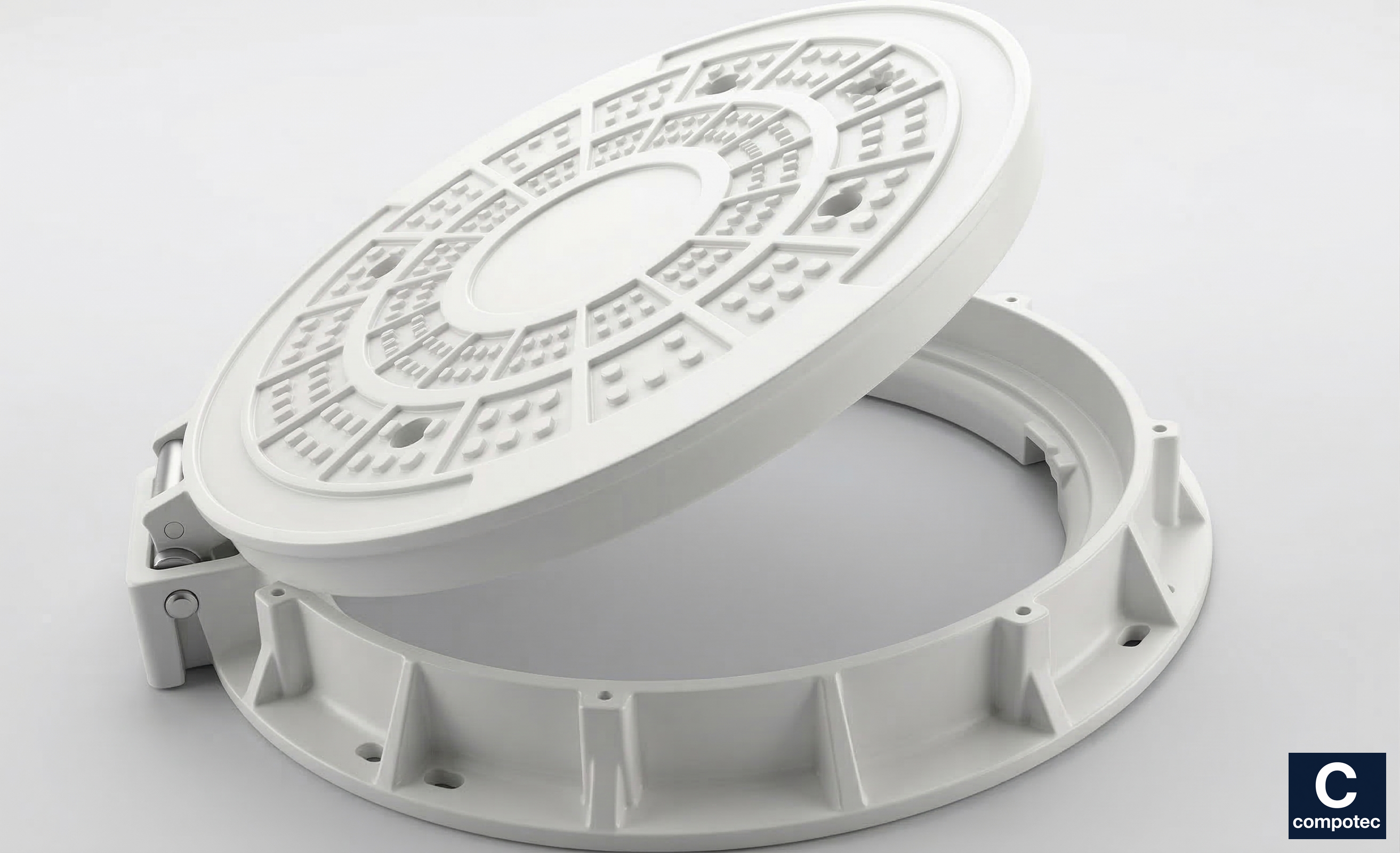
Gullies are opened far more often than manhole chambers, because silt traps have to be emptied. A dual jointed hinge that opens to 180° lets one operative fold the grating clear of the chamber instead of lifting it out and laying it in the traffic lane.
A manual locking system keeps the grating in place under braking and turning loads and prevents unauthorised opening. Specify both features explicitly; they are the difference between a two-minute clean and a road closure.
Why composite is used in gully positions
Gratings sit in standing water containing road salt, silt and hydrocarbons — the harshest position in the drainage network. Composite (GRP) does not corrode in that environment, and it has no scrap value, which removes the incentive behind grating theft.
Unit weight also matters here: the GG-101 set at 22.5 kg and the GG-100 set at 34.5 kg are handled differently by a two-person gang than a comparable metal assembly, and quieter behaviour under traffic is a genuine benefit in residential streets.
What to write into the specification
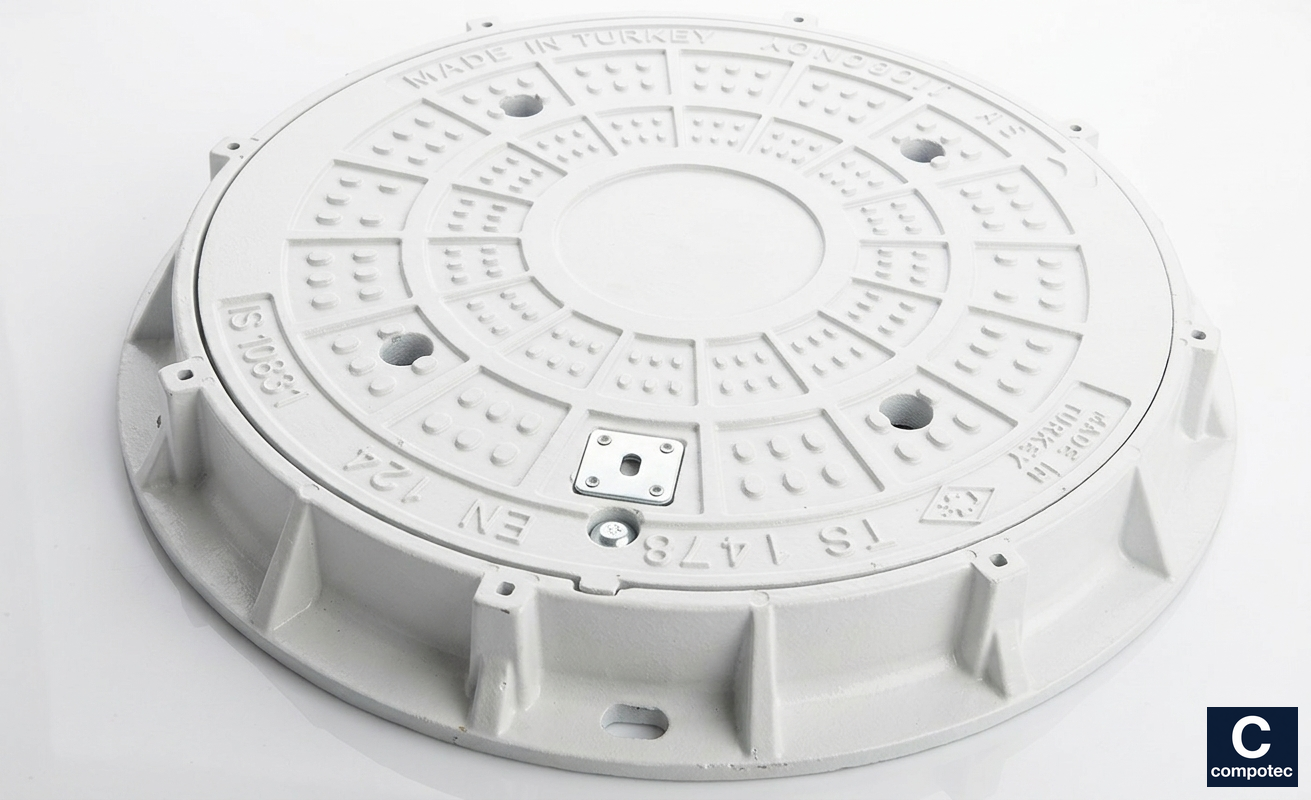
State the load class per gully, the grating format and dimensions, the hinge and locking requirement, the material, and the standard the product is designed to. Compotec composite gully grating sets are designed in line with EN 124 and each model states its available classes on its own product page.
Where an authority applies its own marking or colour policy, raise it at enquiry stage: logo application and a colour range are available and are easier to agree before production than after.
Specify to the gully position, confirm the chamber opening on site, and insist on a hinge and lock arrangement that lets a single crew clean the trap safely. The model pages list the dimensions, weights and classes needed to complete a schedule.